Food Finders
In The News
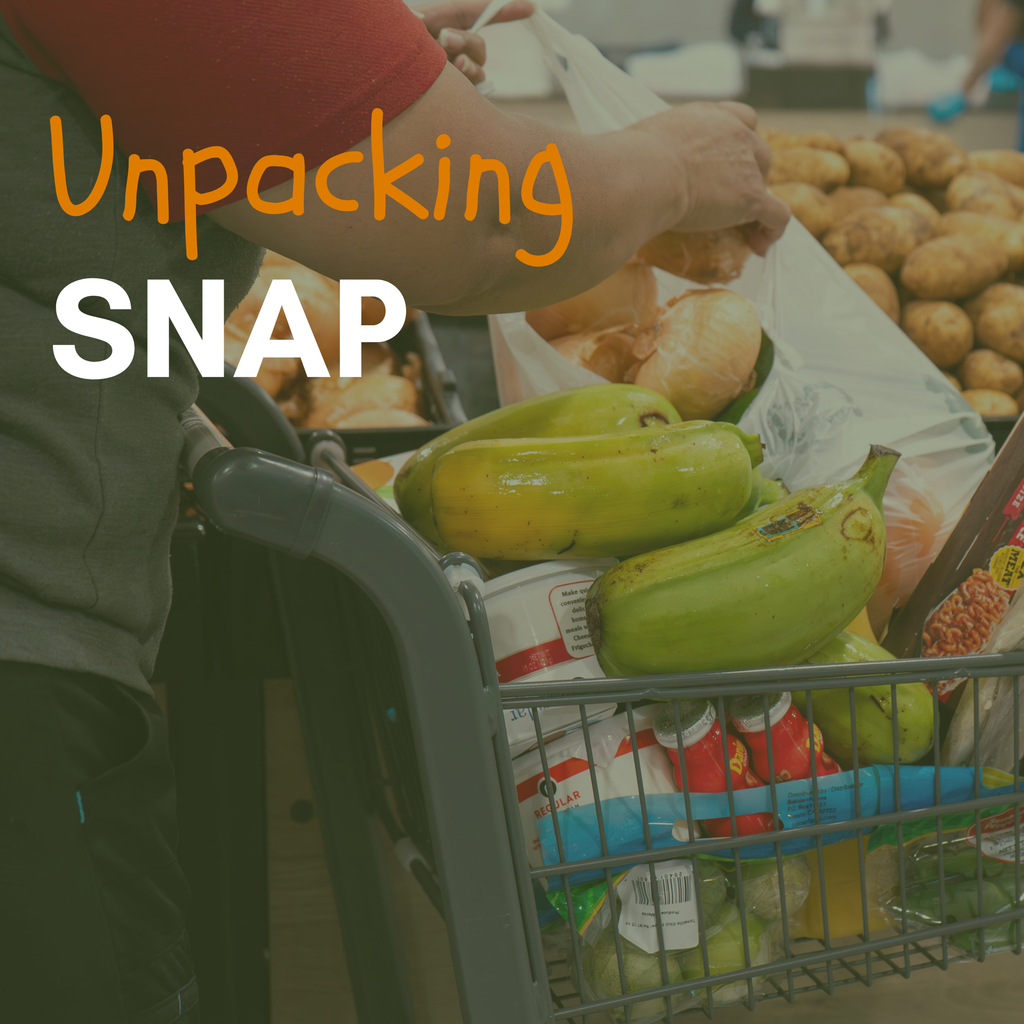
Over a multi-part series, we will take a deep dive into SNAP, including what it takes to enroll, why SNAP is not enough for many families, myths about SNAP, and what would happen if the SNAP program was eliminated.
We are often asked why so many people look to organizations like Food Finders and our partner pantries and meal programs for the food they need in lieu of or in addition to government benefits. It is easy for many to grasp challenges like rising costs, inadequate incomes, and transportation constraints/proximity to supermarkets. More often, what is puzzling is why this need exists when Supplemental Nutrition Assistance Program (SNAP) benefits are available through a state and federal partnership. Surely, it would seem that people who need it can apply for SNAP and use those benefits for groceries. If only it were that simple. The process for applying for SNAP benefits is shockingly difficult.
It starts with determining eligibility, which is greatly based on income and household size. Not only do these factors set parameters on who can get benefits, they also determine how much assistance they can receive. On its face, this makes sense, but when we look a little closer, the rigid income standards exclude many who are in need.
It comes down to what the income threshold is set at. There are so many people in our community who do not qualify based on income and yet cannot afford enough food to feed their family. United Way classify these neighbors as “Asset Limited, Income Constrained, Employed (ALICE).” In simpler terms, this means that their income is high enough to exclude them from public welfare programs like SNAP, but too low to ensure that they can afford all necessities, including enough food. According to United for ALICE, 26 percent of Hoosiers fit the ALICE description. In our 16-counties, an average of 53 percent of food insecure neighbors do not qualify for SNAP based on income requirements, according to Feeding America.
Additional requirements, some added as recently as last year, also complicate matters. Many applicant groups now must prove that they work or volunteer at least 80 hours per month. This includes previously exempt groups like veterans, those experiencing homelessness, young adults aging out of foster care, parents with children ages 14 and 17, and people between the ages of 55 and 64. SNAP benefits were also eliminated for certain immigrant groups, including green-card holders. As a result, SNAP participation has decreased by nearly 5 million people as of May 2026, according to the Center on Budget and Policy Priorities.Work requirements present their own complications. What happens if someone loses their job, for example. According to the requirements, most people are only allowed three months of not working in a three-year period. This can especially present challenges for people who rely on seasonal or contract work.
Still eligible? Now comes the paperwork. Get ready to provide a stack of documentation including photo ID, proof of Social Security Number, pay stubs, bank information and other financial documentation, proof of citizenship and Indiana residency, and proof of expenses. Of course, not everyone possesses all of this documentation. In fact, much of the same documentation is required to obtain a photo ID. So, if you are missing one, you likely are missing several. And the process of getting replacement documents can be just as long and difficult.
And then there are the forms. Many, many forms. One neighbor, who helped their octogenarian mother apply for benefits, was puzzled as to how anyone completes the process without support.
That is why Food Finders’ resource coordinators work hard, both at the Fresh Market and out in our 16 counties, to support neighbors through the SNAP application process, assisting with nearly 300 in the past year.It is also why we are strong advocates for expanding and simplifying government programs like SNAP. For those deemed ineligible or who stumble in the application process, they have nowhere else to turn for support but local organizations like food banks and pantries. Thus, organizations like Food Finders remain critical community institutions, even when government programs exist.
Look out for the next edition where we look at the constraints on using SNAP benefits once someone is enrolled.